

Ian Schiller
A family member calls. Their loved one has been detained, they have only part of the story, and they want to know what happens next. Before you can evaluate the options, you need to establish the facts, identify what is missing, and decide what needs attention first.
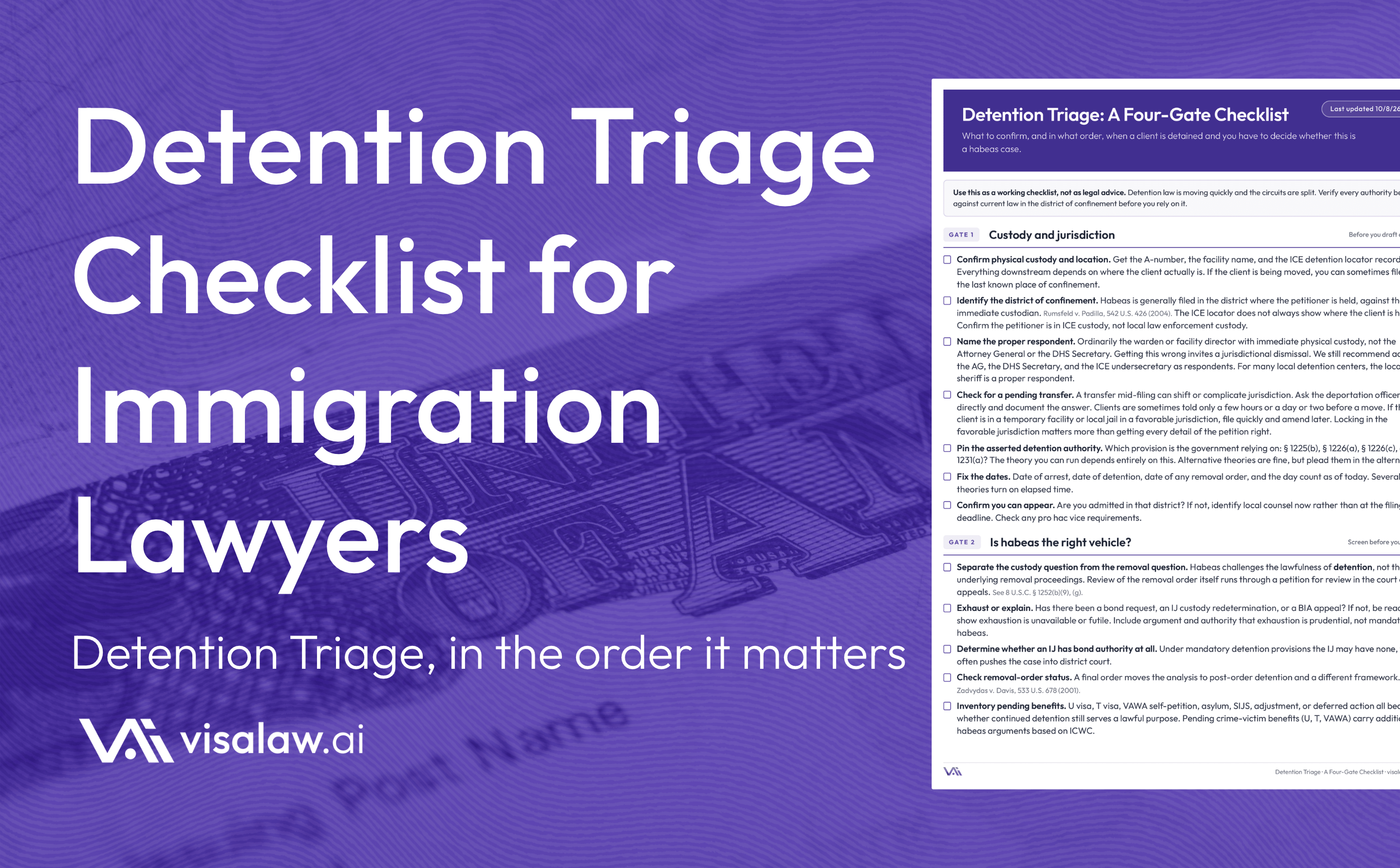
Visalaw AI's free Detention Triage Checklist gives immigration lawyers a practical structure for that conversation. The three-page resource organizes the initial assessment into four gates, with a separate first-call question list for the family. Keep it beside your intake notes to help prepare the information you need to evaluate whether habeas may be an appropriate path.
Download the free Detention Triage Checklist.

Use it when a new detention matter reaches your desk, an existing client is detained, or a colleague asks you to help assess a potential habeas case. It can also help organize a referral to counsel who will evaluate the litigation options.
You do not need a complete file to start using it. Its value is helping you distinguish confirmed information from what still needs to be obtained. A facility name, a few documents, and a family member's account may give you a starting point, while leaving important questions open.
The checklist gives those questions a place to go so they can be researched, assigned, and followed up.
The resource follows four gates:
The final page includes a first-call question list covering the client's circumstances, history, available documents, and family contacts. It is designed to help you make better use of the conversation while the family is on the phone.
Start with the first-call list. Use it to organize your notes, recording who supplied each important fact and what still needs confirmation. Treat a document you have reviewed differently from information someone recalls over the phone.
Then work through the four gates as an initial assessment. Mark unresolved questions, missing records, and issues for attorney review. If something urgent comes up, flag it immediately rather than waiting to finish the checklist.
Turn the gaps into specific follow-up tasks. Instead of leaving “get more information” in the file, identify the document or answer needed, who will seek it, and when the team will check back.
Finally, use your notes to prepare a short handoff: what is confirmed, what remains uncertain, what may be urgent, and which decisions counsel needs to make. If you are consulting or referring to another attorney, that structure can make the discussion more focused.
The practical benefit is a repeatable starting point. A checklist helps the team ask a consistent set of questions while leaving room for the facts that make each matter different.
It also makes unfinished work visible. An unchecked item can identify a research question or missing record before someone assumes the issue has been addressed. That is useful whether your firm handles detention matters regularly or encounters them occasionally.
The checklist supports preparation; the attorney makes the legal assessment. Confirm current authorities and local procedures before relying on any legal proposition or filing strategy in the resource.
Save the checklist with your firm's detention intake resources, or keep a printed copy where you take initial calls. The next time a detention question arrives, you will have a structure for gathering the information and organizing the next steps.
Get the free Detention Triage Checklist for the four-gate framework and first-call question list. No demo call is required to download it.
Use it when a new detention matter comes in, an existing client is detained, or a colleague asks for help assessing a potential habeas case. It provides a structure for the first conversation, follow-up tasks, and attorney review.
Yes. Start with the information available, distinguish confirmed facts from unverified reports, and identify the records you still need. The checklist helps organize those gaps so your team can assign follow-up tasks.
No. The checklist helps organize the initial assessment; the attorney must evaluate the facts, current law, jurisdiction, and available options. It is a working resource, not a substitute for independent legal research or professional judgment.
Yes. Complete the form on the checklist download page to access the free three-page resource, including the four-gate framework and first-call question list. No demo call is required.


 View all blogs

Subscribe below to receive tips for using AI in immigration law, product updates, and relevant news in immigration.

Memphis, TN